
Homai Haumaru: Give Me Shelter - The Hori Gallery brings Rangatahi Voices to Pātaka
At Pātaka in Porirua, the Homai Haumaru: Give Me Shelter exhibition from Te Whare Toi o Hori (The Hori Gallery) brings together the voices of rangatahi from three kura, using art to explore mental health, identity, and wellbeing through a kaupapa Māori lens.
Facilitated by Ngāti Toa Rangatira artist Hohepa Thompson and supported by Māhutonga through its initiative fund Ka Kā Te Rama, the project is part of a wider series of wānanga delivered across Porirua, Kāpiti and Te Wairarapa. Across these rohe, rangatahi from Mana College (Porirua), Te Kura Kaupapa Māori o Te Rito (Ōtaki), and Kuranui College (Wairarapa), came together in creative wānanga to co-design and create large-scare artworks.
The young artists were invited to engage with the often difficult kaupapa of whakamomori through creative expression, reflection, and connection. At its heart, Homai Haumaru is a series of hand-designed whare, each representing the individual – layered with words, memories, and relationships that shape who they are.
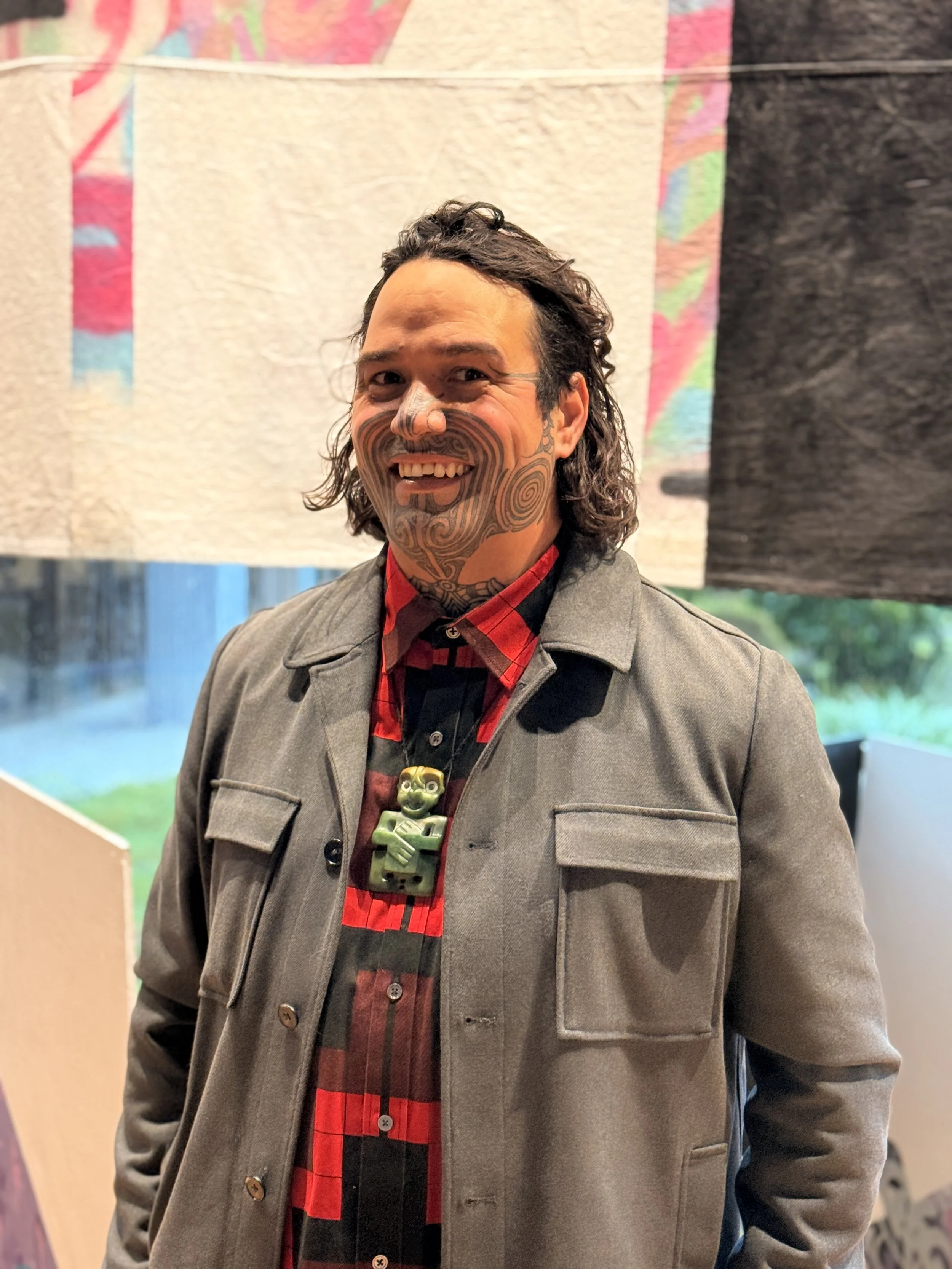
Grounded in Te Whare Tapa Whā, the works reflect the four pou of wellbeing – taha tinana, taha hinengaro, taha wairua, and taha whānau. As Hori explains, “Each whare acknowledges the four walls that support our wellbeing… if one of those walls are out, the whare starts to shake.”
A central kaupapa of the exhibition draws on the movement between Te Pō and Te Ao Mārama – darkness and light - reframing difficult experiences not as something to fear, but as a space for growth, potential and creativity.
“Te Pō is not a place to fear because you actually learn a lot about yourself when you are in those spaces,” Hori reflects.
For Mana College kaiako Brittany Buttenshaw, the impact on students was immediate, saying they had responded well to the opportunity to interact with a revered Ngāti Toa artist.
“I try to get as many opportunities with artists as I can for my students, and this was one I couldn’t turn down,” she says. “Particularly with the topic Hori was bringing - it’s a hard topic… but using art makes that easier,” she says.
That safe, creative space was intentional. Through the wānanga, rangatahi were supported to build confidence, strengthen self-expression and step into leadership while being grounded in te ao Māori. The intended impact extends beyond the individual – the project aimed to strengthen bonds with whānau, the kura and communities involved in shaping the kaupapa to ensure the mahi reflected local stories and aspirations.
The rangatahi themselves found both creative freedom and transformation from a deeper understanding of mahi toi through the process. A handful of Mana College rangatahi were at the exhibition opening and gave comment on their experience.
Leo Cooper-Martin (17) says the project helped shape his artistic pathway and gave him confidence to use the new knowledge in a scholarship application.
“I knew I liked graffiti as a style… but now I appreciate it even more. I’m also now thinking of going for an art scholarship… and this has given me a good base to start,” says Leo.
Nariko Waiti (17) reflects on the unexpected joy in the process and was thankful for the chance to learn more about the spray-painting technique from a celebrated artist.
“I didn’t think it would be so much fun, but it was… I managed to express myself through art and understand the concept better. I’ve always enjoyed seeing graffiti art and to learn the technique from someone who knows a lot about it was really helpful,” says Nariko.
For Zion Taurima (17), the kaupapa opened up space to engage with difficult realities - new ways of thinking, particularly about something negative, in a positive way.
“I found out that it’s necessary to talk about this hard stuff. I usually try to stay positive so that negative thoughts don’t take over, but through this programme I’ve found out that the negative thoughts don’t necessarily mean it will bring my energy down, but instead it’s something we need to talk about,” says Zion.
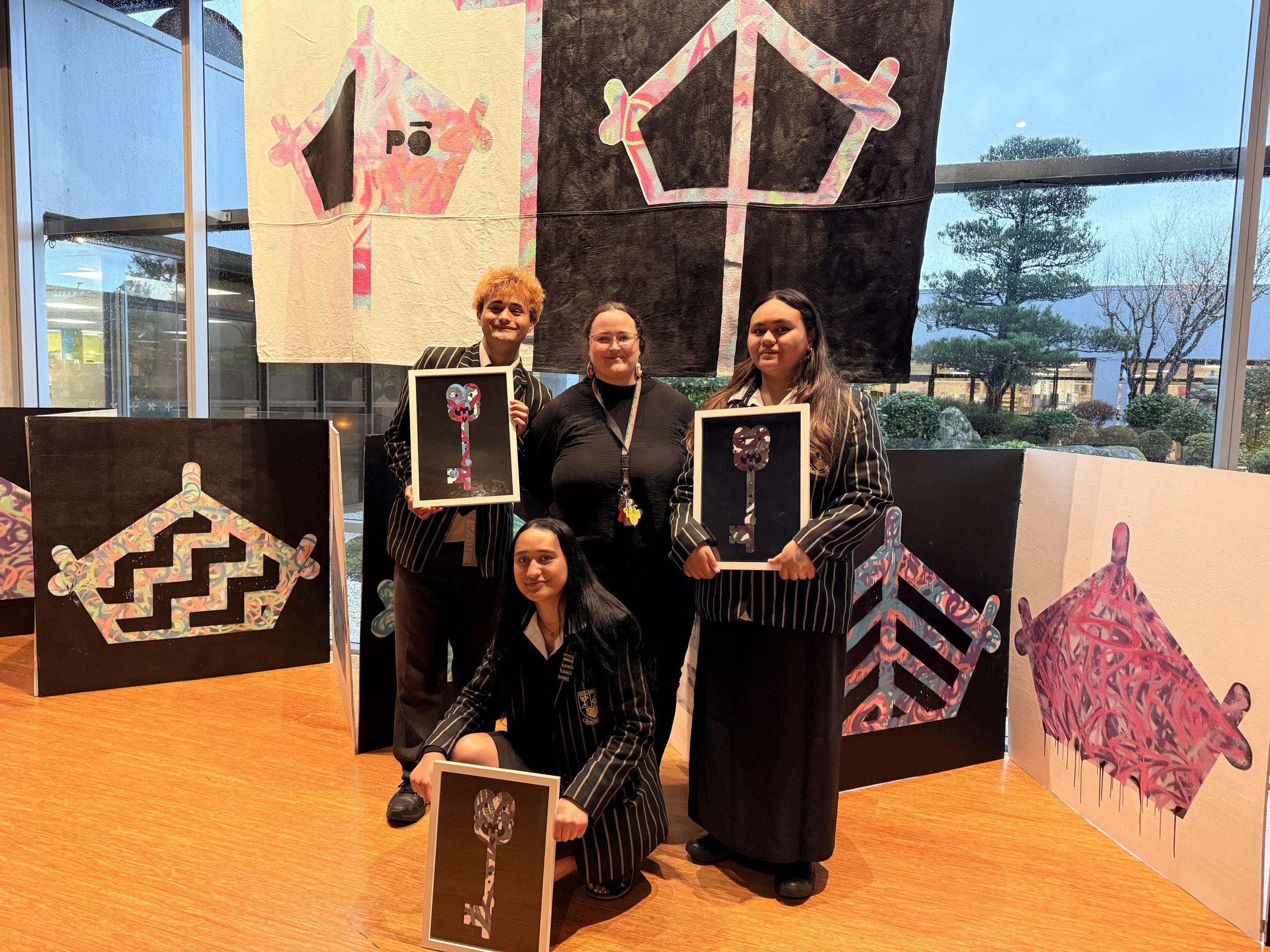
From left to right: Leo Cooper-Martin, Nariko Waiti, Kaiako Brittany Buttenshaw and Zion Taurima.
More than an exhibition, Homai Haumaru is a call to reflect and connect. These artworks, alongside murals developed through the wider project, stand as lasting taonga within their communities, reflecting rangatahi identity and sparking ongoing kōrero about hauora.
Each whare offers a simple but powerful prompt - How is my whare today?
Through this, rangatahi and the wider community are encouraged to build self-awareness, strengthen resilience, and look out for one another, recognising that while support can come from many places, the journey to wellbeing begins within us.